Despite soaring hardware sales and relatively easy year-over-year comparisons, analysts say August's NPD U.S. retail game revenues -- due out this Thursday -- are likely to show another decline for the game industry -- and that the longevity of popular multiplayer games is the cause.
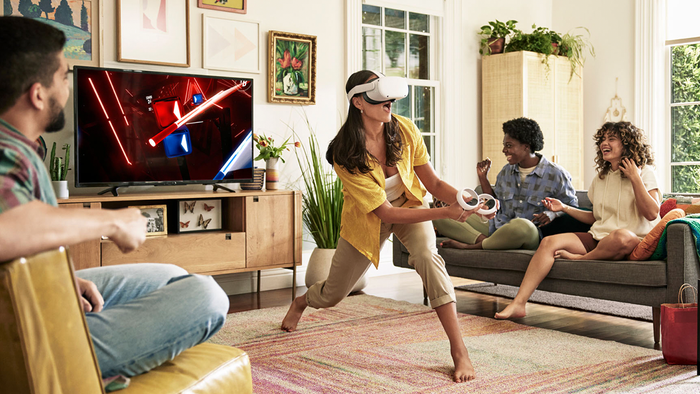
Robust multiplayer modes have been quintessential to the success of many games, particularly those in the competitive first-person shooter category.
In that genre, in fact, many gamers have begun to purchase titles like Halo and Call of Duty primarily for those modes, leading developers to create much more minimal single-player modes than they would for titles that depended less on multiplayer.
But developers may be getting a little too good at keeping players engaged, suggests Wedbush analyst Michael Pachter.
He forecasts a 6 percent software decline and a 7 percent hardware decline (significant contractions in the handheld space are offsetting unit gains in home consoles) when NPD results for August's U.S. retail come out this week.
The analyst says strong multiplayer is "the biggest driver" of the last 18 months' regular declines in packaged software sales.
"Based upon statements made by Microsoft earlier this year, it appears that millions of people are playing multiplayer games online for an average of 10 hours a week, making a serious dent in the time available to play other games," he says.
"We remain convinced that the popularity of online multiplayer gaming has caused a decline in overall packaged product sales, and we expect this decline to persist unless the publishers change the multiplayer model," Pachter adds.
Publishers have already begun experimenting with different ways to monetize online content, such as the "$10 wall" solution pioneered by publishers like Electronic Arts; other possibilities include charging for premium services (as Blizzard does with its World of Warcraft and StarCraft II). Microsoft itself recently made slight raises to the cost of Gold subscriptions, while PlayStation Network continues to be free, but recently introduced a paid "Plus" subscription option.
"While we expect the publishers to continue to offer free multiplayer content that is similar in quality to what is offered today; we expect the publishers to channel their efforts on improvements to multiplayer by offering a premium subscription service, in the hopes of driving an ever- increasing number of customers to a pay service," Pachter says. He suggests investors will remain cautious about the game industry until they can see the gains from a settled monetization strategy for online.
Pachter's assertion that the biggest reason for sales declines in the last eighteen months is too many people playing Modern Warfare is surprising. I might have thought that global recession thingamabob would have trumped it.
For his assertion to be valid, I think we'd need to see evidence of high-profile titles in that timeframe underperforming. But the likes of Assassin's Creed 2 and Red Dead Redemption have sold incredibly well.
I feel sorry for all the people who are already paying for X-box Live (which just got a price hike) on top of their internet service, and now are going to have to pay even more just to play specific games. Not to mention the 60 dollars they have to pay up front.
Gaming is becoming an expensive hobby and I'm not sure if people are going to put up with more service fees, especially in a down economy. The masses would likely abandon games that have service fees for games that don't, especially if the game quality is the same.
I don't entirely agree. Just look at how much people are willing to spend on Warhammer 40k (the nerdy one with the statues ;).
What I do see however is that these types of games will become more niche, with people focusing on one or two games (again, similar to someone who plays Magic: The Gathering and Warhammer 40k, but doesn't pay to play any other card games or board games).
I have to agree with both Johns...there is unannounced recession that is affecting all of us. Gaming really is an expensive, but incredibly funny, interactive hobby. Rent and food come first when money is tight.
The problem is that Pachter and others are right about the basic economics. To many gamers, hours = value. That has been discussed endlessly, more recently regarding Limbo. Gamers will pay $60 for a ten hour game, yet Halo 3 and COD/MoH games are 200 hour games. Therefore, there is a tremendous consumer surplus for the multiplayer focused games, which is a good part of the reason why they are the top selling games of this era. The recession did not stop COD: MW2 from becoming one of the best-selling games of all time. It encouraged that.
Now for Activision, which makes probably more than half of its revenues from World of Warcraft, a monthly subscription game, why do they want to make a game that people play for hundreds of hours, almost endlessly for $60 total? Why is someone going to buy their lesser offerings if they are still playing a ten month old game? Maybe three million players buy map packs, but that is just a fraction of the total sales.
Really, what needs to happen is for more budget titles or simpler titles need to be sold for something less than $60. Games aren't movies, its one thing for all movies to cost $10 a ticket, its entirely another for all games to cost $60.
I agree with you Jon ( yes another Jon enters the fray!) and John Giordiano as well. Gaming needs a serious price restructuring, I don't understand why certain games retail for $60 when they can't hope to compete with the competition at the same price point.
a recent example of this I would mention is " naughty bear" the game seemed like it was a creative little venture that could provide some decent fun...but not $60 worth of fun by any means. Inf act I would love to see the sales numbers for 3d dot game heroes ( which originally retailed at $40) vs. non-triple A $60 titles. There is no real reason to mark every game $60 especially when the developement costs differ so much between titles. I am sure more money went into red dead redemption than the amount that went into crackdown 2. yet by making them similar in price you are forcing fans to compare the two and the lesser title almost always loses.
hopefully 3d dot game heroes and deadly premonition start a trend of having games with lower costs than others because not every game is equal and not every game should be priced as such. to some price may indicate quality, But I am FAR morel likely to buy a cheaper title on an impulse than I would any $60 title. I scrutinize new games like a detective before I purchase them and more often than not I just don't buy a game when I know for a fact that two weeks after release I will be bale to find it for at least $10 cheaper than the new retail price.
gaming is getting more expensive and it does I get pickier and pickier as a consumer.
When you're dealing with large, publicly held corporations the only motivation behind the actions they take is greed. Greed why they prefixed the price of all titles at $60 regardless of budget, quantity and quality of the content.
It's also why I get infuriated when these corporations claim people who buy and sell used game sales are hurting them. I've said this many times, when publishers decided to prefix the price at $60 after the next-gen consoles released, they created the massive used game market we have today.
Sigh. Can we get advice from someone who's more consistent than a coin flip? This is industry spin posing as "analysis." But, then again, that pretty much describes Pachter's entire career.
Another day, another explanation, why the industry is in decline for years now. This time it is multiplayer. How long will th search for reasons go on, until the industry understands, that they are actually loosing customers, because they are in an creative crisis, fueled by sequels, maximum monetarisation of franchises and a concentration on a ridiculous small target group?
Amen! You, sir, get a trophy. The reason why the videogame business is in decline is because today's videogames are terrible! I'm not kidding when I say I'd rather have a Sega Saturn and Dreamcast. Heck, if it wasn't for Nintendo, this industry would be completely finished (and even they seem to foul up more than they should).
I want VIDEO GAMES. I do not want movies. I do not want steroid freaks with guns. I do not want annual sequels that are 95% unchanged. And I do not want condescending "casual" games. Why is this so hard? Every game designer should be given a Sega Saturn with VF2, Sega Rally, Virtua Cop 1 & 2, Nights, and the Panzer Dragoon Trilogy. That's how it's done, people.
I believe there are a whole slew of reasons that the market is down for gaming, some of these include either really great game quality vs. very poor game quality, incredibly original ideas vs lack of original ideas, too many games/titles per month, lack of gamer cash at hand, games are quite expensive, sequel-mania, multiplayer, and open world games. There are probably more in there, but it basically comes down to a little story like this. A kid/teen/adult has only so much cash in their pocket and so much time in a day. The kid and teen have less money but more time, the adult has more money but less time. The adult will invest in maybe one long game and a few shorter games per month, while the kids will eat up whatever they can get with their $60 bucks that they earned over the last couple months. The adult can pick up more games, but probably won't because they have less time to play them and the kids dont have the money to buy more than one game a month so they pick the ONE that best fits their interest and will offer the most game time(online multiplayer is high on the list)--the adult(maybe maybe not). So games are dwindled down to the best picks from the start--with 20 new games coming out each month...who has the time or money to play them?? Yeah there are different types of games but all the same most of the time there is at least 2 or 3 games that stick out over the 20 that most people will pick up first--the others will be put off till a price drop or will be forgotten all together(good bye devs). Something that would have an impact on this is say there were two good but shorter games that were $30 a pop rather than 1 for $60---I really enjoy picking up interesting/strange games but sometimes you need to make a choice--and they get left behind. But if you cut the price for games that dont deserve the $60 price point--then you have people willing to pick them up and maybe another game--As much as publishers don't want to cut the price--they must realize that not all games are worth $60 and $70 dollars---I've seen this most apparent in Wii games--you have your $30 dollar games--like Flips Twisted World coming out--intriguing game/though not much hype---the you have another gem like Lost in Shadow that is at a bit higher price $40--then you have your standard first party Ninty titles that never lose their $50 price point--and never seem to decrease whether new or used.
I also forgot one huge influence on the gaming industry--the pretentious gamer. Those that will only play metacritic rated games that reach at least 85, and are AAA titles--every other game is terrible in their minds and will write hater reviews for all other games that don't objectively rate games on various standards.
You may not want movies, but neither do I want shallow experiences. Viruta Cop 1 and 2 only last so long in the face of golden games such as Fallout 3, Half-Life 2, or Batman: Arkham Asylum.
Games today are not terrible, they're just different from that arcade experience we grew up with.
For his assertion to be valid, I think we'd need to see evidence of high-profile titles in that timeframe underperforming. But the likes of Assassin's Creed 2 and Red Dead Redemption have sold incredibly well.
Gaming is becoming an expensive hobby and I'm not sure if people are going to put up with more service fees, especially in a down economy. The masses would likely abandon games that have service fees for games that don't, especially if the game quality is the same.
What I do see however is that these types of games will become more niche, with people focusing on one or two games (again, similar to someone who plays Magic: The Gathering and Warhammer 40k, but doesn't pay to play any other card games or board games).
Now for Activision, which makes probably more than half of its revenues from World of Warcraft, a monthly subscription game, why do they want to make a game that people play for hundreds of hours, almost endlessly for $60 total? Why is someone going to buy their lesser offerings if they are still playing a ten month old game? Maybe three million players buy map packs, but that is just a fraction of the total sales.
Really, what needs to happen is for more budget titles or simpler titles need to be sold for something less than $60. Games aren't movies, its one thing for all movies to cost $10 a ticket, its entirely another for all games to cost $60.
a recent example of this I would mention is " naughty bear" the game seemed like it was a creative little venture that could provide some decent fun...but not $60 worth of fun by any means. Inf act I would love to see the sales numbers for 3d dot game heroes ( which originally retailed at $40) vs. non-triple A $60 titles. There is no real reason to mark every game $60 especially when the developement costs differ so much between titles. I am sure more money went into red dead redemption than the amount that went into crackdown 2. yet by making them similar in price you are forcing fans to compare the two and the lesser title almost always loses.
hopefully 3d dot game heroes and deadly premonition start a trend of having games with lower costs than others because not every game is equal and not every game should be priced as such. to some price may indicate quality, But I am FAR morel likely to buy a cheaper title on an impulse than I would any $60 title. I scrutinize new games like a detective before I purchase them and more often than not I just don't buy a game when I know for a fact that two weeks after release I will be bale to find it for at least $10 cheaper than the new retail price.
gaming is getting more expensive and it does I get pickier and pickier as a consumer.
It's also why I get infuriated when these corporations claim people who buy and sell used game sales are hurting them. I've said this many times, when publishers decided to prefix the price at $60 after the next-gen consoles released, they created the massive used game market we have today.
I want VIDEO GAMES. I do not want movies. I do not want steroid freaks with guns. I do not want annual sequels that are 95% unchanged. And I do not want condescending "casual" games. Why is this so hard? Every game designer should be given a Sega Saturn with VF2, Sega Rally, Virtua Cop 1 & 2, Nights, and the Panzer Dragoon Trilogy. That's how it's done, people.
I also forgot one huge influence on the gaming industry--the pretentious gamer. Those that will only play metacritic rated games that reach at least 85, and are AAA titles--every other game is terrible in their minds and will write hater reviews for all other games that don't objectively rate games on various standards.
Games today are not terrible, they're just different from that arcade experience we grew up with.