GAME JOBS
Contents
A Revolution in Sound: Break Down the Walls!
 
 
Printer-Friendly VersionPrinter-Friendly Version
 
Latest Jobs
spacer View All     Post a Job     RSS spacer
 
June 18, 2013
 
Edge of Reality
LEVEL ARTIST
 
Sojo Studios
Generalist Game Engineer
 
Sunstorm Games
Game Designer
 
ROBLOX Corporation
Senior Network Engineer - C++
 
The Workshop
Senior Graphics Programmer
 
NetherRealm Studios
Software Engineer
spacer
Latest Blogs
spacer View All     Post     RSS spacer
 
June 18, 2013
 
Pitfalls In Automation
 
Some Advice for the Aspiring Sound Designer
 
How to Ace a Games Industry Job Interview [2]
 
Supporting Gamification User Types
 
Making Ear Monsters: Developing a 3D Audio Game [1]
spacer
About
spacer Editor-In-Chief:
Kris Graft
Blog Director:
Christian Nutt
Senior Contributing Editor:
Brandon Sheffield
News Editors:
Mike Rose, Kris Ligman
Editors-At-Large:
Leigh Alexander, Chris Morris
Advertising:
Jennifer Sulik
Recruitment:
Gina Gross
Education:
Gillian Crowley
 
Contact Gamasutra
 
Report a Problem
 
Submit News
 
Comment Guidelines
 
Blogging Guidelines
Sponsor
Features
  A Revolution in Sound: Break Down the Walls!
by Rob Bridgett [Audio]
6 comments Share on Twitter Share on Facebook RSS
 
 
May 16, 2012 Article Start Page 1 of 3 Next
 

[Rob Bridgett, audio director on Prototype 2 issues a rallying cry for the mixing of the audio discipline with the rest of the studio, and opening up the closed studio space to collaboration -- perhaps even suggesting a fundamental change in studio structure.]

Video game development is a collaborative and iterative endeavor, where artistry, design, ideas, and technology intersect, with creativity at its core. There is one analogy I have found useful -- although not always accurate -- in summing up the industrial and collaborative nature of development. Think of it like a Hollywood movie production with no single director; instead, a group of peer directors run each discipline: art, sound, design, and technology. Ideally, they don't run them independently.


Having these directors, and their teams, work together collaboratively on the push and pull of a shared vision is perhaps one of the most compelling and gratifying aspects of the development of video games, yet it is rarely something that is reflected in the design of the spaces we use. What causes this? The designs and functions of audio department suites and sound studios is a major factor. There are a number of very specific problems that have arisen out of the soundproof box design currently found in most, if not all, game development houses.

On paper, the requirements for a development studio are clear: a collaborative and open environment through which different disciplines can easily move, work, and play. Creativity, iteration, and innovation are the cornerstones of our business as developers. "It was just one year ago that 1,500 CEOs identified creativity as the number-one leadership competency in our complex global marketplace," says this Co.Design article.

Yet, where audio design is concerned, I believe we are at a crossroads where old, outmoded sound studio design and architecture is failing us on an industrial scale in not allowing us to fulfill our collaborative, critical and iterative role.

But, wait a second. Surely soundproofed audio studios are necessary to the work of a sound designer? This is, in one sense, absolutely true, at least of the actual asset creation, tuning and implementation work.

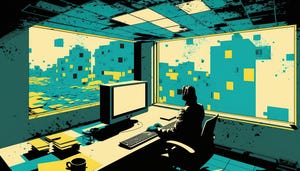
The problem requires different kinds of thinking -- for example, one or two transparent glazed walls or windows in iso booths with sight-line access, built in central positions within team spaces, answers the design requirement of isolating sound (in order to do the work without distracting or distraction) without isolating the occupant. Headphones are temporary options, as they are more fatiguing for the wearer than listening through speakers, but they should certainly be used as a flexible tool in a more agile armory.

This is an idea about promoting a "culture of sound" throughout an entire company, so rather than being cloistered in quiet, solemn spaces, audio designers are integrated in the team. They could become more used to sound (and the distraction that comes with it) in the office as a part of everyday life.

I want a culture where sound is not literally invisible. This, I hope, would provide an alternative vision to the common notion that audio production needs to happen in a studio. In fact, I don't believe this is true of the work of a sound designer; the collaborative conversations and meetings are as crucial, if not more so, as a part of designing sound. I think the notion of sound work needs to be broadened into production (creating and working with sound assets themselves) and ideation (or "design" discussions). Both are equal parts of the process.

With architectural and cultural change answering these challenges -- these two forces are invariably intertwined -- we could be on the brink of a true renaissance in video game development. That's a bold statement, I realize. Let's consider the factors at play and what we can realistically expect to gain from a different working attitude and environment.

 
Article Start Page 1 of 3 Next
 
Top Stories

image
The creation of Ubisoft Singapore: Building a ship as it sails
image
Puzzle design in Valve's Portal 2 alternate reality game
image
Why people cheat, and what to do about it
image
Bogost: Let's make 'earnest' games, not 'serious games'
Comments

James Ackley
profile image
Very nice Rob. Lots of great points in there.

Ariel Gross
profile image
Rob, you're my hero. Totally agree. Getting out and hanging with the team is the best. Open door sound design is awesome. The future of game audio is gonna rock.

David Fisk
profile image
well...considering the turnover rate with employees in game sound, it will be hard to create a positive company culture.

Scott Petrovic
profile image
Great post Rob. It would be pretty nice if audio and music people had more interaction with the rest of the development team. The few projects that I have done sound and music for, I always end up feeling siloed with how I work. Audio has usually been added at the last minute, sometimes with the developers sweating it if there are any issues or glitches with how the sounds play, loop or imports into the engine.

It can be a challenge sometimes to share music when you are in the middle of composing it. Most people have a hard time hearing the "potential" of the song when it is still in its blocky, raw form.

Randy Thom
profile image
Great points, Rob! This is essentially what I was calling for in the 90's when I wrote "Designing a Movie for Sound." If sound is ever going to get the respect it deserves we need to find ways to collaborate on projects from the beginning, or before the beginning.

Randy Thom
Director of Sound Design, Skywalker Sound

Michael Theiler
profile image
Its important to have the confidence in your own worth to engender this sort of change. When I started in the industry I did not have the confidence to make your more practical suggestions a reality. Now I do, and see how easy they would be to implement. I impeach all game audio professionals to act on these suggestions. By virtue of your employment as an audio professional you have the right. Thanks Rob for providing some practical steps to early collaboration and continued team involvement.


none
 
Comment:


UBM Tech