My Message close
GAME JOBS
Latest Jobs
spacer View All     Post a Job     RSS spacer
 
May 19, 2013
 
Sony Computer Entertainment America LLC
Sr. Network Systems Engineer
 
Amazon Game Studios
Sr. Game Designer
 
Treyarch / Activision
Technical Animator
 
Amazon Game Studios
Quality Assurance Manager
 
Amazon Game Studios
Lead 3D Environment Artist
 
Amazon Game Studios
Game Graphics Engineer
spacer
Blogs

  Creating Emotional Attachments to Game Items
by Justin Nearing on 06/28/11 04:20:00 am   Featured Blogs
4 comments Share on Twitter Share on Facebook RSS
 
 
The following blog was, unless otherwise noted, independently written by a member of Gamasutra's game development community. The thoughts and opinions expressed here are not necessarily those of Gamasutra or its parent company.

Want to write your own blog post on Gamasutra? It's easy! Click here to get started. Your post could be featured on Gamasutra's home page, right alongside our award-winning articles and news stories.
 

I designed a game in my spare time where users collect cards representing units, form decks with those cards, bring the decks into a battle, and buy more cards with proceeds. While designing it, I started thinking about how I can get the user to form an emotional attachment to some of the cards.

Games like Magic: the Gathering already have a few features that causes users to form emotional attachments- a very rare card has a greater value than the rest, therefore the user has more emotional investment in this card than the others in her deck. This is a fairly weak emotional attachment, but with a bit of work, you can create strong emotional attachments to in-game items.

For the game I described above, I wanted to tie the emotional attachment of a unit to the users interactions with it. Interactions such as the amount battles the card has been in, the amount of kills, deaths, raw damage, etc. I wanted to use these stats because emotional attachments are naturally formed by a persons experiences, so building mechanics that leverage this are naturally compelling.

How do we do it? As the units usage stats increases, you reward the unit. Not the user, the unit.

In my game, I rewarded the unit by giving it a unique identifier- in this case a better name. For example, a deck has five "Soldier" cards, and during gameplay one gets seventeen kills and is promoted to a "Hardened Solider".

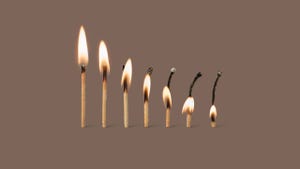
The progression from a common Solider card, to a unique Hardened card, is where the user forms the emotional attachment to the unit. The name anchors the memory of this play session to this specific unit. And now every time the user sees this special card, they remember how much fun it was in that game they played. Positive emotional attachment achieved.

But we're not done.

If the user has a positive emotional attachment a particular unit, they are more likely to use it again. As they do, you start buffing the unit so that its' real value- its' attack, defense, etc. starts to reflect the users perceived value of the unit. If the unit crosses a certain threshold, immortalize the unit- make it a Hero, a Legend, a lasting positive experience with the game.

But you don't make immortal immortal, as in can't die. See, all things must die, unless you monetize.

If this unit dies, you present them with a one-time only screen of "revive for $2.00 worth of premium currency or else your favourite thing in the game dies". Are you evil for doing this? Yes. Do you lose users at this point? Maybe, but if you buy $10.00 worth of premium currency right now you get an awesome rare care guaranteed.

This process of creating emotional attachment to in-game items puts to rest two questions: "How do game developers make money off their games?", and "Can games make you cry?" Not only does it make your game more engaging, but it makes it more engaging over time. Forming real emotional attachment to a virtual item is not easy, but can be critical to having a successful game.

Good luck out there.


Comments

Eric Spain
profile image
That's a very cool way of doing it. It reminds me of the original xcom where your soldiers would be promoted and get better, so you'd protect them at all costs, ready to go into the hard missions.


For the unit death event, you could just rephrase it positively instead of negatively. Instead of "Pay or Die!", it would be "They are dead! Do you save them?" and then you could do things like give out 1 resurrection token per 'premium' pack which also comes with a rare. Make them feel like they are saving the unit from certain death, rather than choosing the lesser evil.


I'm thinking this could also be applied to other game genres, specifically, RPGs. Often the items in them feel just like a bunch of stats thrown together, and sometimes some cool graphics, but as soon as an upgrade comes along, the old one gets tossed without a second thought. Applying the "items improve as you use them" motif to rpgs would create attachment to the item as it's used and levels up. It would become more than just a bunch of stats. Then add customisation on top, even if it's just cosmetic, then the player would feel that the item is truely theirs.

Justin Nearing
profile image
Good point about the monetization. The example I gave is fairly brutal, and there is definitely ways to lessen the evil and keep the money.


I think this feature can be extended to almost any game with an inventory of items. Nexon's Combat Arms, an FPS, is all about collecting better equipment over time. If that equipment becomes special to you, using the examples above, people would be that much more engaged.

Finlay Thewlis
profile image
I think visuals play a big role in emotional attachment. If you had a sword that was encompassed in flames where most swords are not then that rare visual factor can cause players to want to keep a hold of it.

Justin Nearing
profile image
Yes, because the flames act as the unique identifier, increasing the perceived value of the item. The more unique an item becomes, either with a name, art, stats, whatever, the more the player wants to use/keep the item.


none
 
Comment:


UBM Tech