My Message close
GAME JOBS
Latest Blogs
spacer View All     Post     RSS spacer
 
May 21, 2013
 
Using Small Studios As Stepping Stones In Your Career
 
How Can You Find Jobs At Blizzard if You're an Artist?
 
Let’s produce HTML5 games with a serious approach.
 
An Object Of Lust
 
Gamasutra Blog Guidelines - Updated and open for discussion [11]
spacer
Latest Jobs
spacer View All     Post a Job     RSS spacer
 
May 21, 2013
 
Treyarch / Activision
Sr. UX Designer
 
Vicarious Visions / Activision
Senior UI Artist-Vicarious Visions
 
Tarsier Studios
Design Director
 
Trendy Entertainment
Marketing Producer
 
Visual Concepts
Game Build Engineer - 2K Sports
 
The Workshop
Character Artist
spacer
Latest Press Releases
spacer View All     RSS spacer
 
May 21, 2013
 
Wargaming
Presents Weekend at
War 
 
Trucker: Parking
Simulator reaches 1
million...
 
Permanent price drop for
Guild Wars 2
 
Bloom Box Plants Puzzling
Seeds in iTunes, New...
 
DRAGONS WILL DOMINATE THE
SKIES WHEN SONY ONLINE...
spacer
About
spacer Editor-In-Chief:
Kris Graft
Blog Director:
Christian Nutt
Senior Contributing Editor:
Brandon Sheffield
News Editors:
Mike Rose, Kris Ligman
Editors-At-Large:
Leigh Alexander, Chris Morris
Advertising:
Jennifer Sulik
Recruitment:
Gina Gross
Education:
Gillian Crowley
 
Contact Gamasutra
 
Report a Problem
 
Submit News
 
Comment Guidelines
Sponsor

  Road to the IGF: Tomorrow Corporation's Little Inferno Exclusive
Road to the IGF: Tomorrow Corporation's  Little Inferno
 

February 20, 2013   |   By Christian Nutt

Comments 2 comments

More: Console/PC, Indie, Business/Marketing, Exclusive, IGF


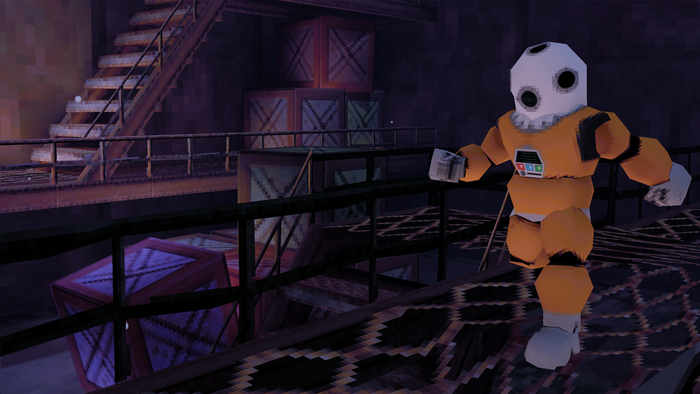
Little Inferno has been a polarizing game, with many loving its send-up of social and mobile time-wasting and rampant consumerism, and others missing the point entirely -- most notably the National Fire Protection Association, which felt that the game, a launch title for the Nintendo Wii U, might give kids the wrong idea about fire safety, since it's all about burning your toys.

Gamasutra speaks here to Kyle Gabler, Allan Blomquist, and Kyle Gray -- who together form Tomorrow Corporation (and separately, are, respectively, two of the developers of World of Goo and, the last, Henry Hatsworth) -- about the multiply IGF nominated game.

What is your background in making games?

Kyle Gray: The three of us (two Kyles and an Allan) met at grad school at Carnegie Mellon University almost 10 years ago, and collaborated on a few projects together, including the Experimental Gameplay Project, which is still running monthly game design competitions. Back in those days, starting a game company right out of school was virtually unheard of. This was back when "indie" was grungy musicians, "steam" was hot water vapor, and "digital distribution" was emailing cat photos.


So instead, we all got jobs at Electronic Arts. But after a while, we got restless and wanted to make our own mark on the industry. Kyle left to form 2D BOY and create World of Goo with the talented Ron Carmel and eventually Allan, while I pitched Hatsworth internally at EA. After both games finished, the three of us got back in touch and started Tomorrow Corporation.

We spent a few months talking and meeting over what we should make. Having just released a platformer and a physics-puzzler, the only thing we knew for sure was we wanted to make something totally different. Little Inferno was the perfect fit -- something no other company would be dumb enough to make!

What development tools are you using?

Allan Blomquist: We all live in different places so finding some way to collaborate was our first order of business. Skype puts us in continuous contact via text and voice calls and we use Google Drive, Dropbox, and SVN to shuffle our files around.

For development we use a few of the usual suspects like Photoshop and Visual Studio, as well as a bunch of internal tools that we occasionally go a little overboard on (although being allowed to use good judgment and decide when it's okay to have fun with something as opposed to robotically maximizing for productivity is a big reason why I became an independent developer in the first place.)

How did you come up with the concept?

Kyle Gabler: We'd been noticing a trend of games that were like slightly interactive screensavers. Like a virtual aquarium. Or a virtual garden. And they seemed so obviously terrible, we thought it would have been brilliant if the developers had hidden a terrifying plot and genuinely great game just below the surface. And maybe only a few players would ever discover it.

A virtual fireplace seemed like a good start -- a suspiciously tiny, deliberately constrained premise, but still ripe for dripping in pieces of an outside world that's huge and scary and just out of reach. We've always loved the idea of setting expectations and then breaking them (here's the first thing we all worked on together back in grad school). Unfortunately, a game like this is a terrible idea for marketing! It's really really difficult to talk about -- and probably a good reason this game would never have been made by a real company!

There's a piece of Animal Crossing fan fiction from like 2007 that's a hilarious example of what can happen if you take an unassuming "casual" game and give it an actual direction. It's called The Terrible Secret of Animal Crossing and well worth a read if you have a free afternoon.

How long has your team been working on the game?

Kyle Gray: Tomorrow Corporation's first game was originally going to be Robot and the Cities That Built Him, based on Kyle's prototype of the same name. After a few months of working on that game we realized we wanted to do something a little more experimental -- something without lasers or hit points. (Spoiler: But there is, in fact, a laser in Little Inferno...)


What was the inspiration behind the game's art style?

Kyle Gray: When we first started releasing screenshots and videos of Little Inferno, we began getting YouTube comments like "wait is thiss Wurld of Gooooo 2?!", which is probably because both games have the same art director guy. While his style has certainly evolved over the years, if you broke both of Kyle's hands and he could draw only by tracing lines with his pupils, the art would still probably look the same.

Have you played any of the other IGF finalists? Any games you've particularly enjoyed?

Kyle Gabler: Hotline Miami with Cactus's trademark flashing neon colors, grotesque illustrations, and unique view of the world have made a bloody rampage game weirdly endearing. I'm really behind, though, on my goal to try all the finalists before GDC in March. Many of them look absolutely beautiful.

What do you think of the current state of the indie scene?

Kyle Gray: The indie scene has found its own voice over the last decade. Like Eliza Doolittle in My Fair Lady, the indie scene has evolved from the harsh Cockney twang of retro-style games, and have moved into deeper emotional territories with games like Journey and Dear Esther and To the Moon while still embracing their indie roots. We're hoping that respectable triple-A landowners will continue to learn a thing or two along the way as well!

Why did you choose to move on to this concept after World of Goo's success?

Kyle Gabler: We were neurotically aware that everyone expected another colorful puzzle game "from the designer of World of Goo" -- so that was the very last thing we wanted to make. We wanted our collaboration to result in something impossible to compare to our previous games -- either World of Goo or Henry Hatsworth. And I'm pretty sure I'm getting dumber as I get older, so competing with a former version is a setup for defeat anyway.

The game plays with ideas around consumerism and also time-wasting in social games. Why did you select to explore these ideas?

Kyle Gabler: I think it's more optimistic and less game-industry-specific than that! We used social/casual game conventions not with a goal to be a vicious satire (though there's absolutely some friendly-spirited ribbing in there), but as a tidy little building block that everyone's already familiar with, to talk about something else -- a simpler, hopefully more heart-warming, overall message.

Also, I might as well admit that I'm a fairly casual gamer and actually kind of enjoy games like Tiny Tower and Animal Crossing and My Little Pony: Friendship is Magic.
 
 
Top Stories

image
Unity's mobile licenses are now free
image
Watch the next Xbox unveiled live
image
Market's ready for new consoles, but old-gen surprisingly viable
image
The next Xbox: What Microsoft needs to reveal this week


Comments

Sergio Bustamante II
profile image
I worked with Kyle Gray while at EA. Gifted designer. Glad to see this article and the impact he's making in the indie scene. Continued success!

Moiz Merchant
profile image
sup sergio! congrats guys!! always sweet to see peeps from the superman teams kicking ass!


none
 
Comment:


UBM Tech